Book 8
Pip’s Promise
For Lara and Zac
Use the arrows, swipe, or tap the edges of the page.
When the lamp goes warm and the garden goes quiet, Ponder comes out to wonder.
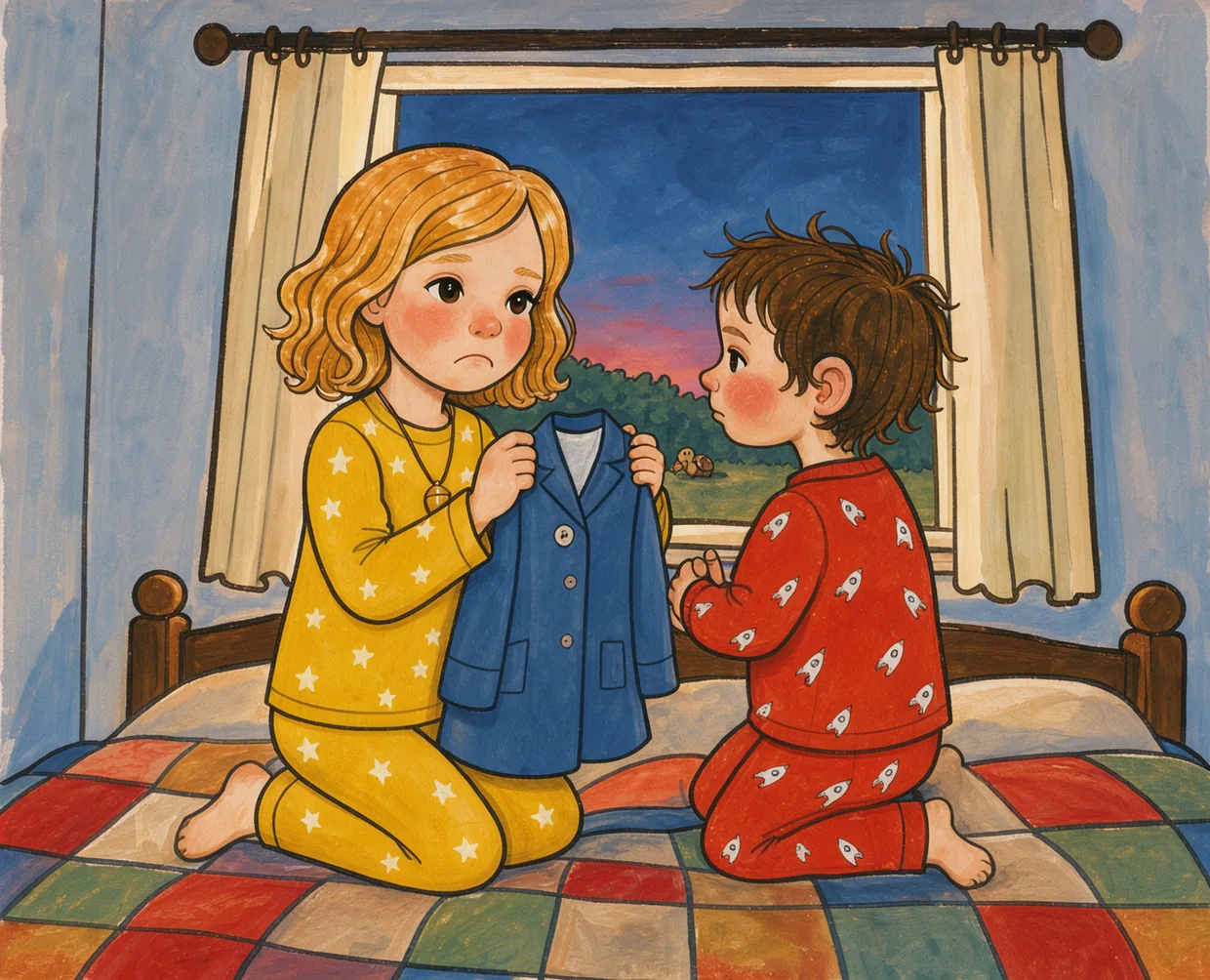
But tonight Lara was not thinking about Ponder. She was thinking about her gold button, the shiny one from her best coat. That afternoon, it had gone missing.
1
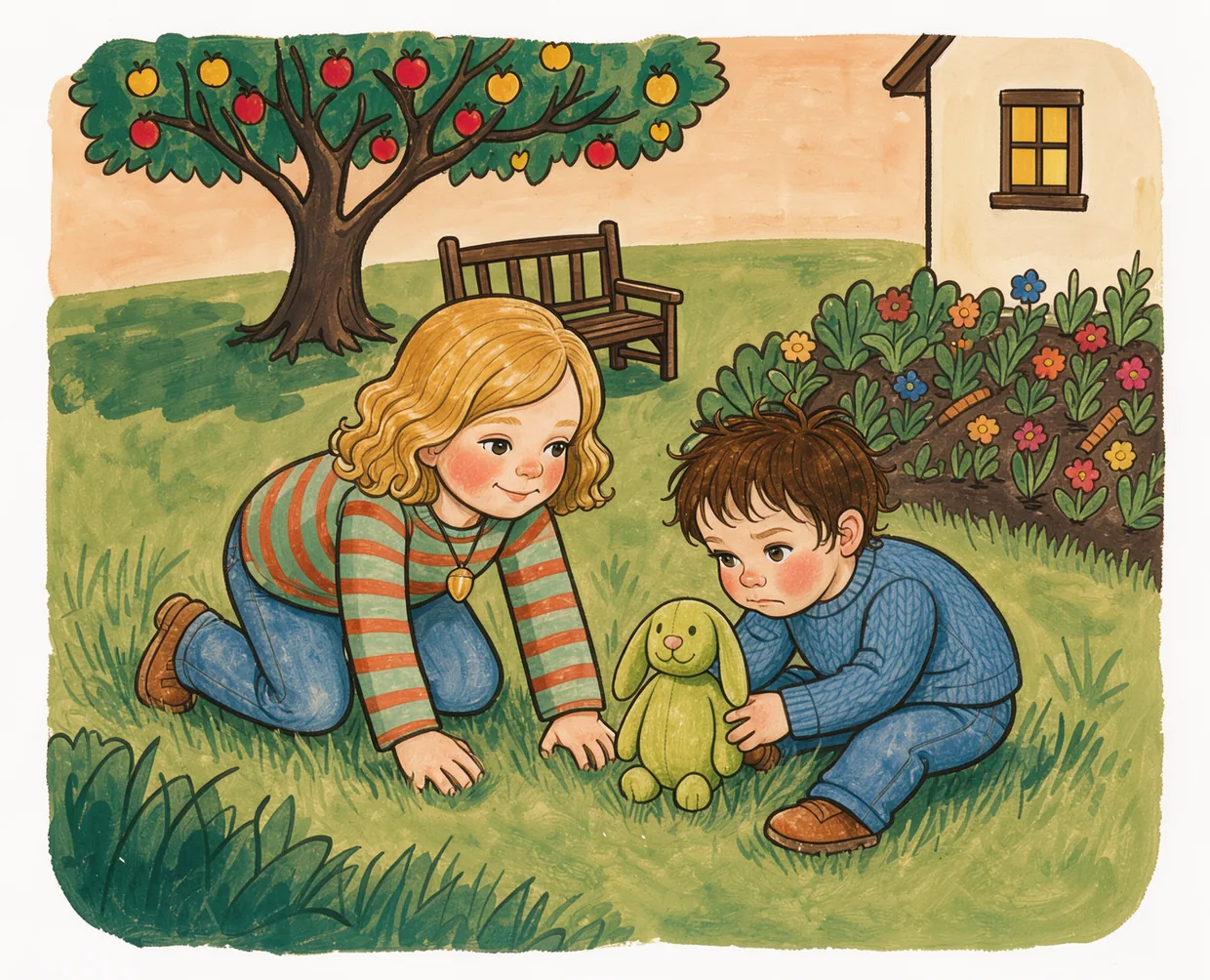
That afternoon, Lara’s gold button had popped off her coat and rolled away into the long grass.
They looked under the bench. They looked in the flowerbed. Zac looked inside Bunny’s ear, just in case. No button anywhere.
2
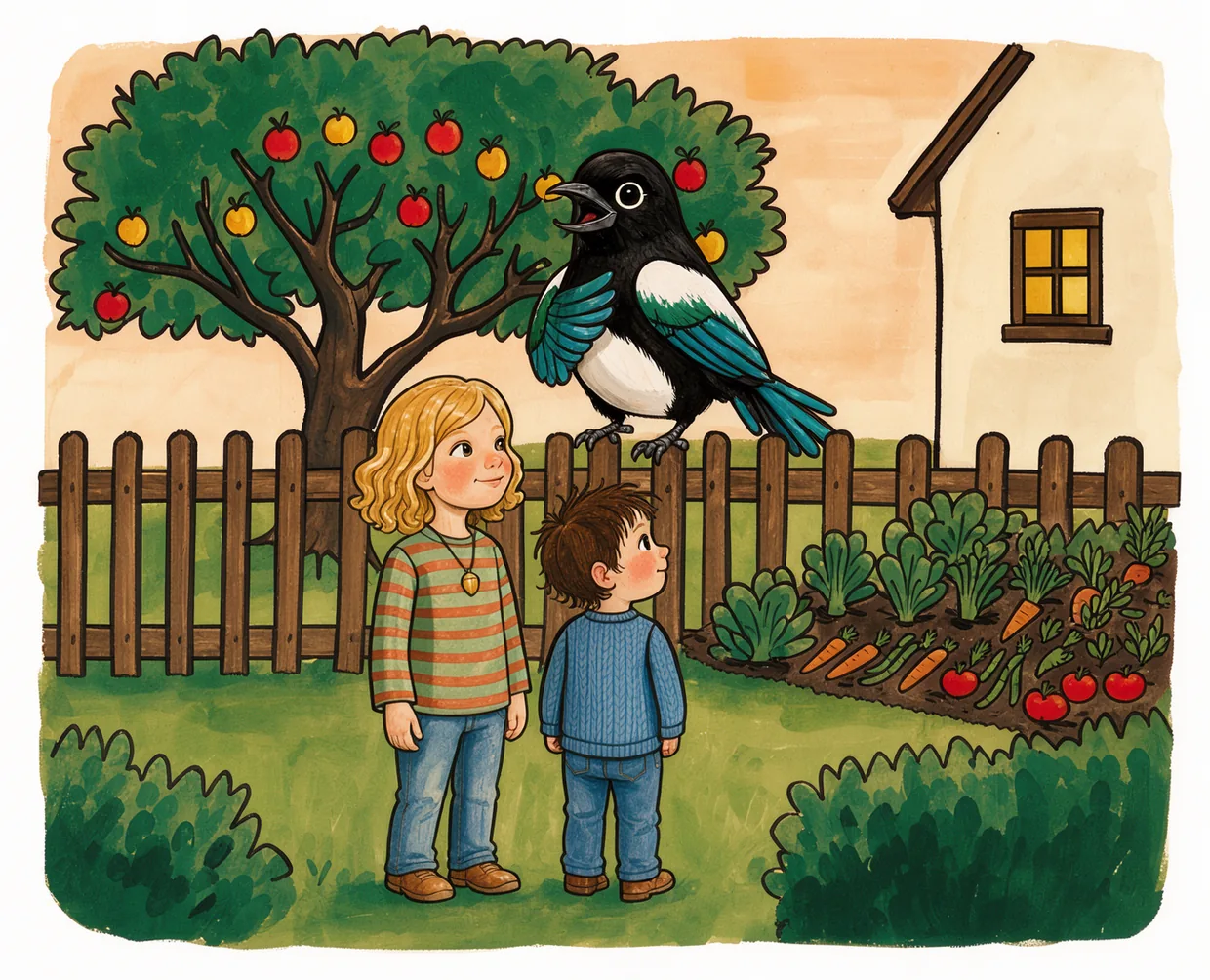
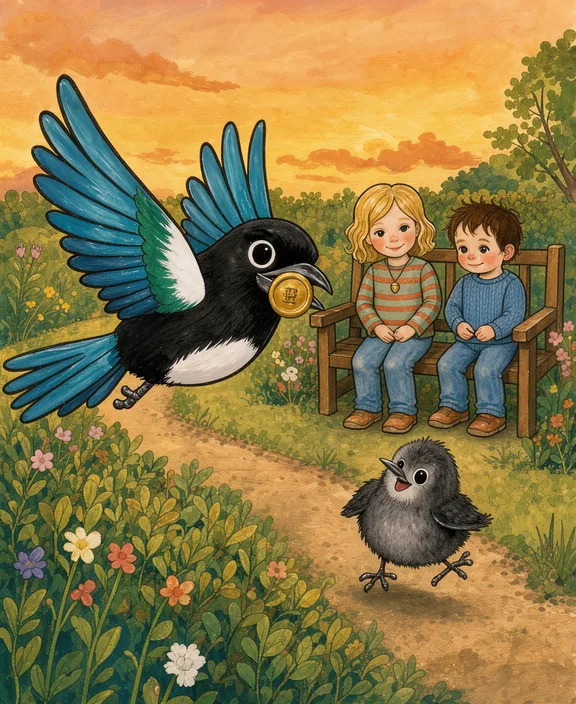
“I’ll find it,” said Pip. “I promise. I’ll bring it back before the sun goes down.”
Pip was very good at finding shiny things. Finding shiny things was his favourite thing in the whole world, after keeping them.
3
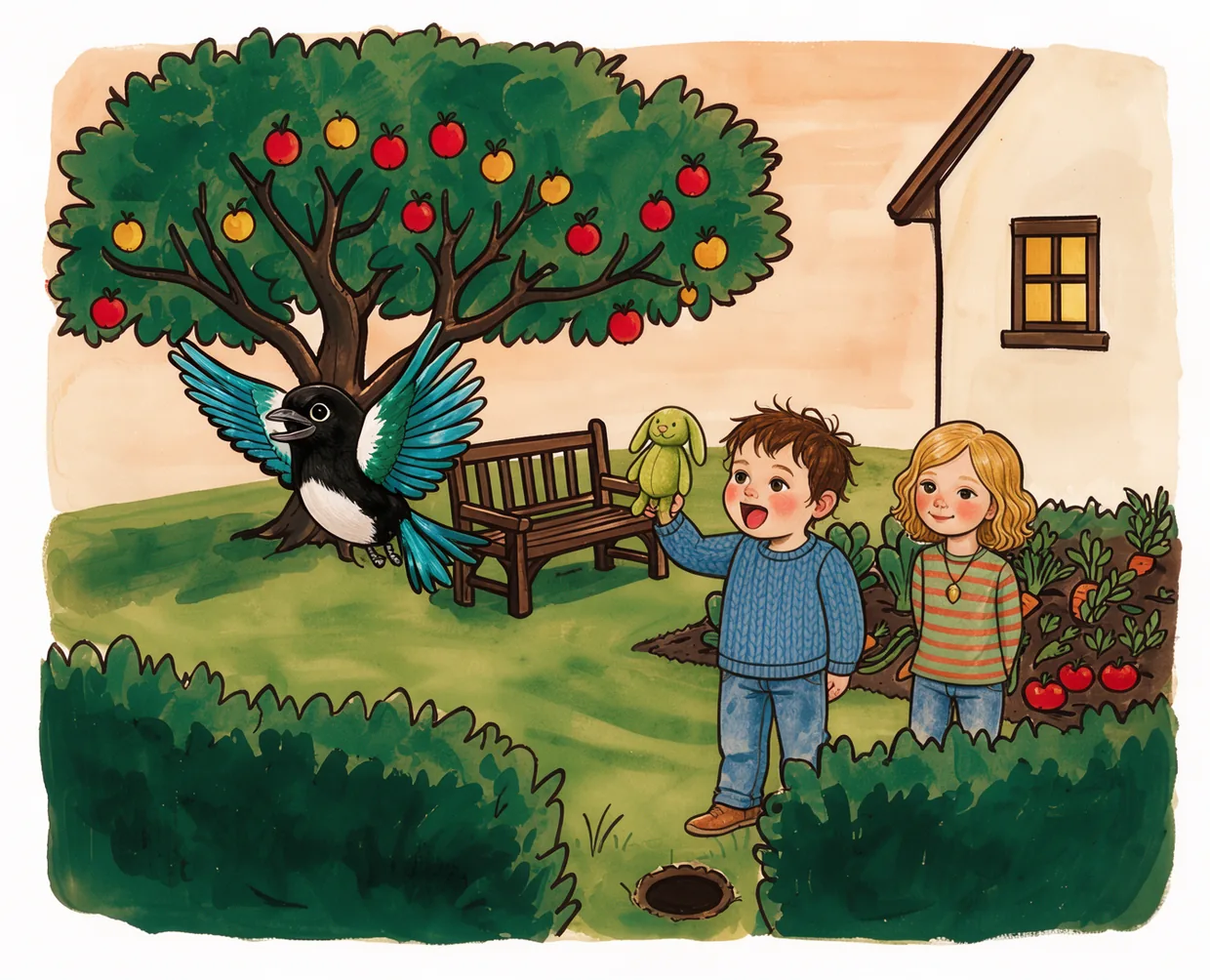
“A promise is a promise!” said Zac. And Pip zoomed away over the hedge.
Lara crossed her fingers anyway. A promise is a special kind of saying. When you promise, you are not just saying that something will happen. You are saying that you will make it happen.
4
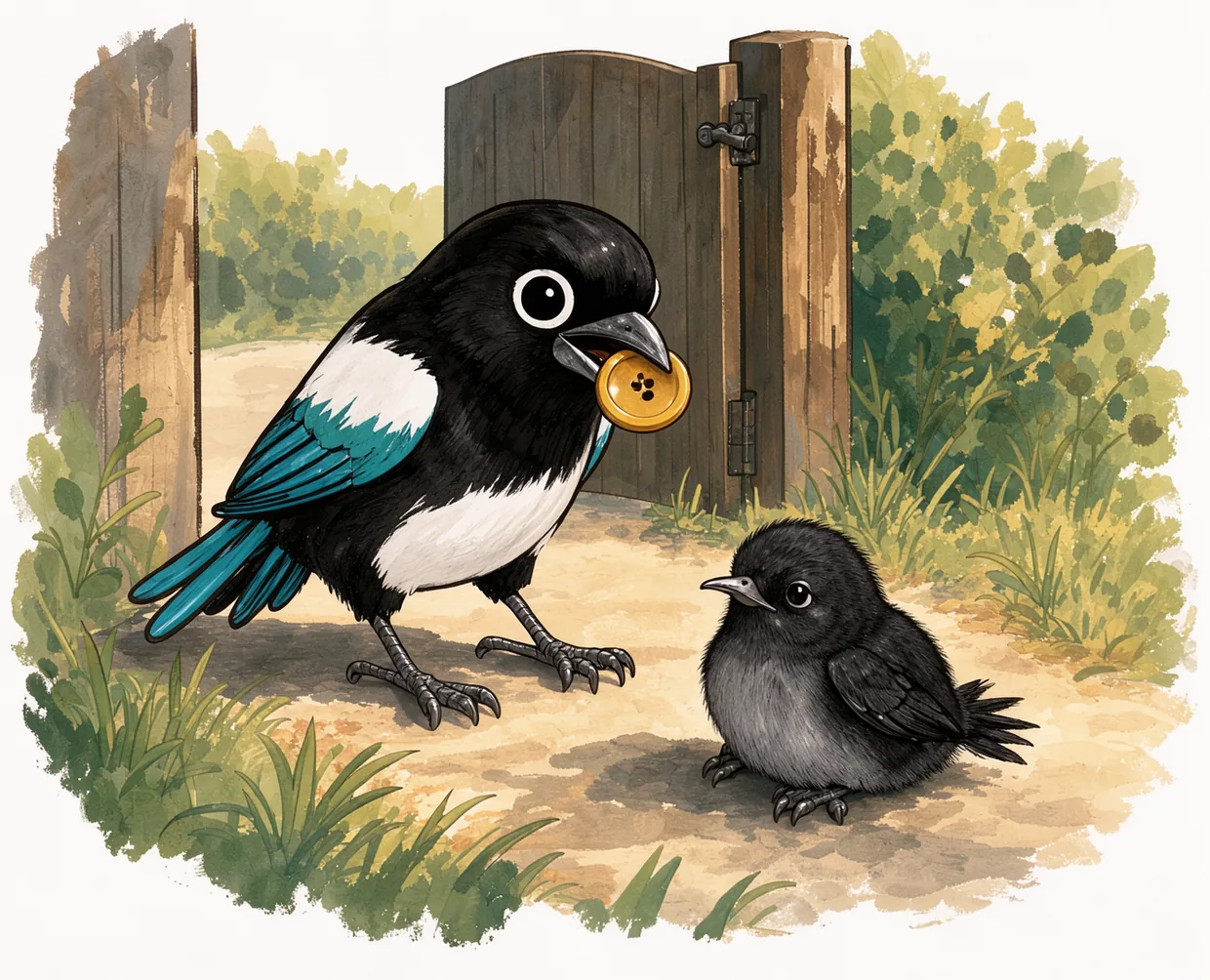
Pip found the button in a puddle by the gate. Then he heard a tiny “cheep”.
On the path sat a baby blackbird, fluffy and round, with a stubby little tail. It had hopped out of its hedge to explore and could not remember the way back. It was perfectly fine. It just looked a bit muddled.
5
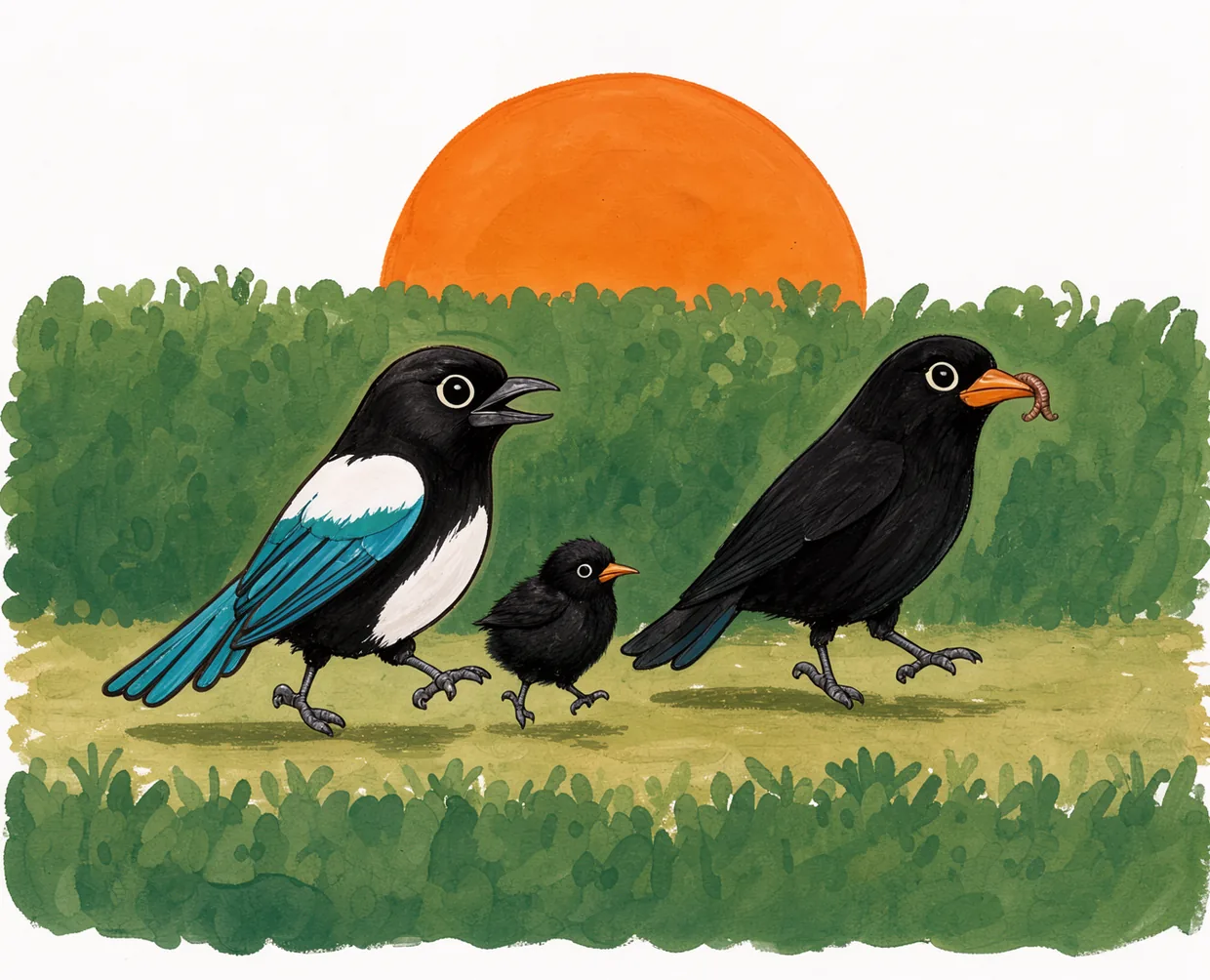
So Pip helped the baby bird hop, hop, hop all the way home to its hedge.
It was a very slow hop. Baby birds stop to look at everything. Its mother was waiting with a worm, and she said “Chack-chack!”, which is how blackbirds say thank you.
6
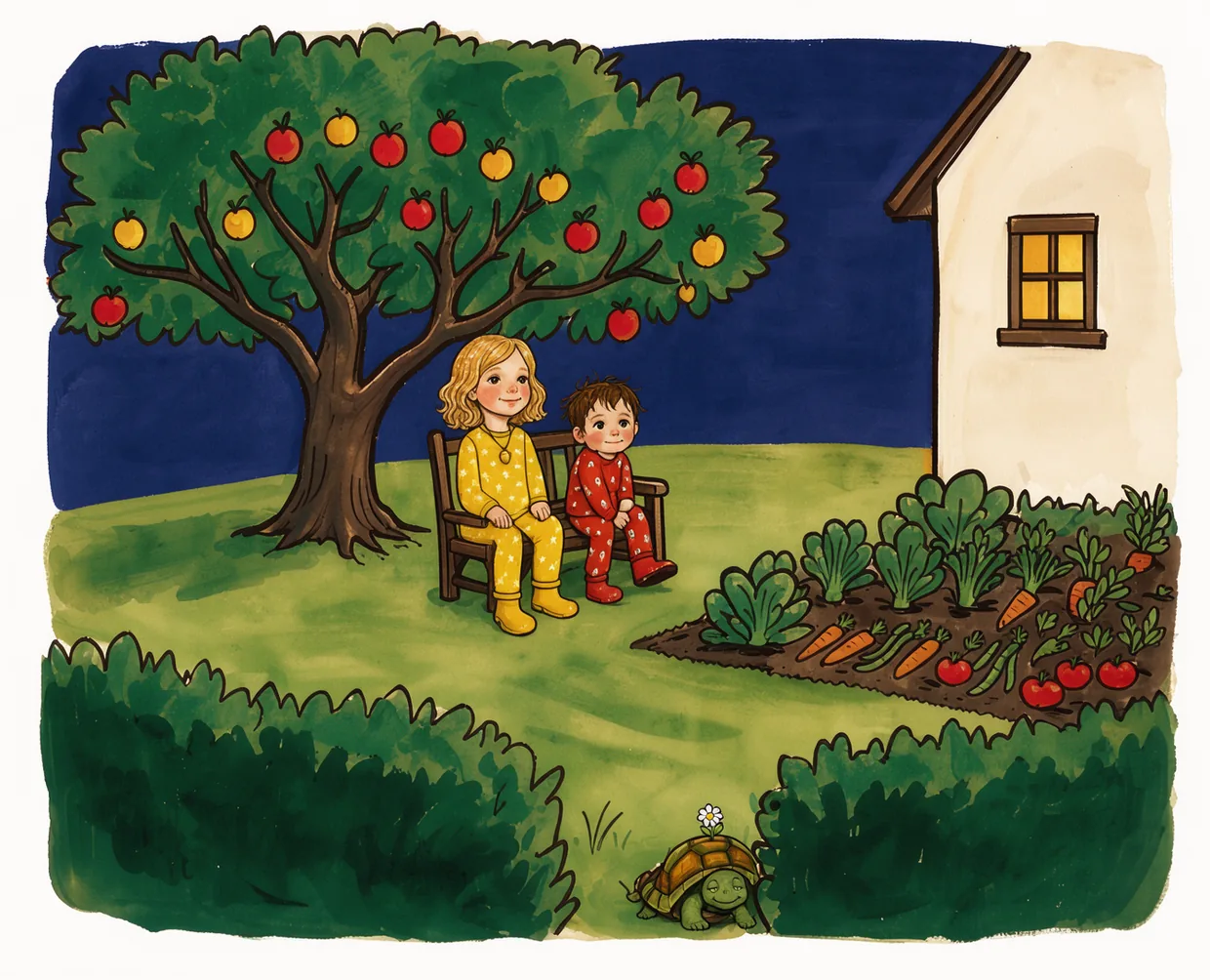
Back in the garden, the sun went down. No Pip. “He promised,” said Lara.
“A promise is a promise!” said Zac, and he stamped his welly. Then, very slowly, as the first star came out, Ponder crept out from under the hedge.
7
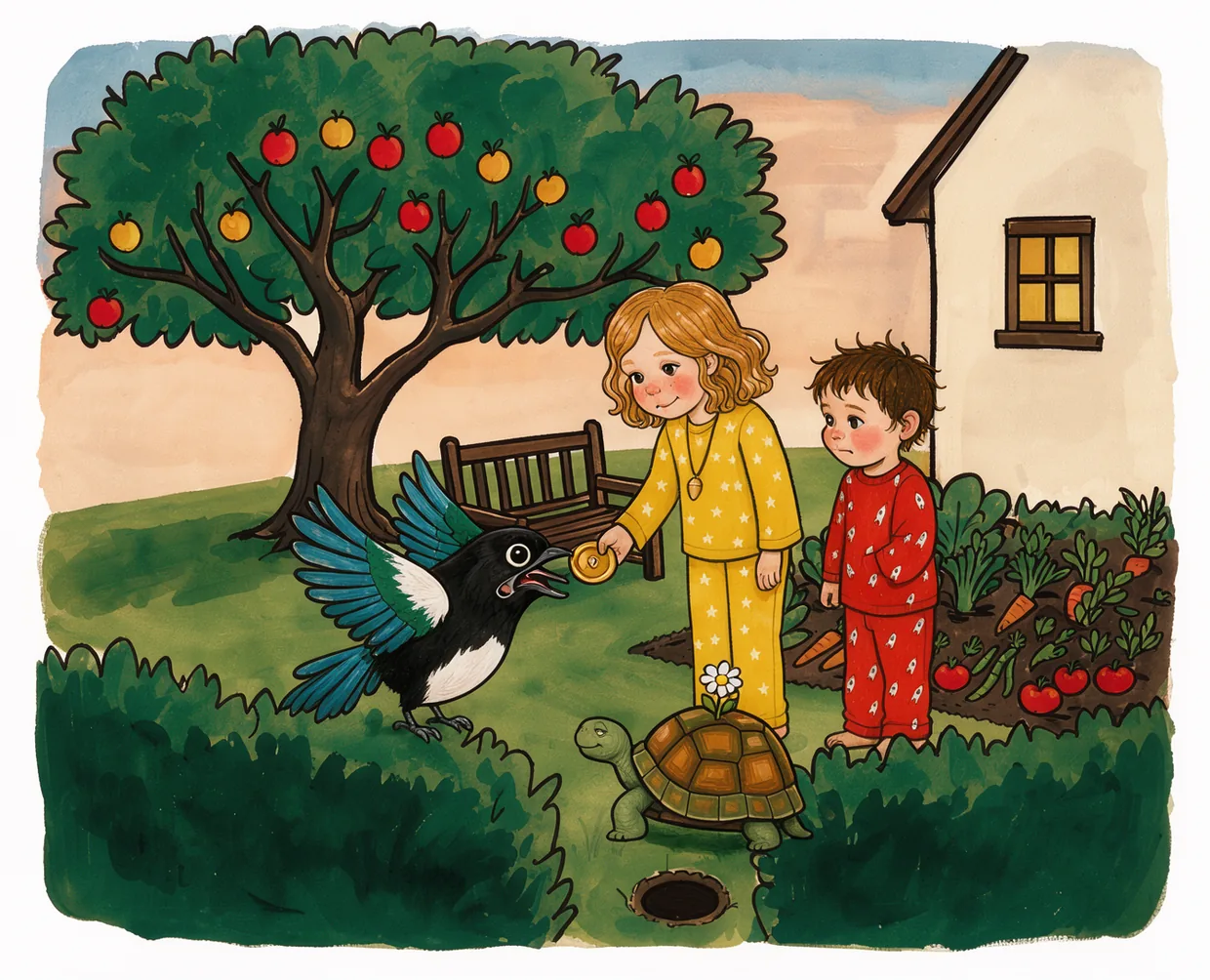
Then Pip landed, puffed and late, with the gold button. “Sorry,” he said. “There was a baby bird.”
He told them all about it. The cheep. The hop, hop, hop. The mother with the worm. Lara took her button. She didn’t know whether to say thank you or to be cross.
8
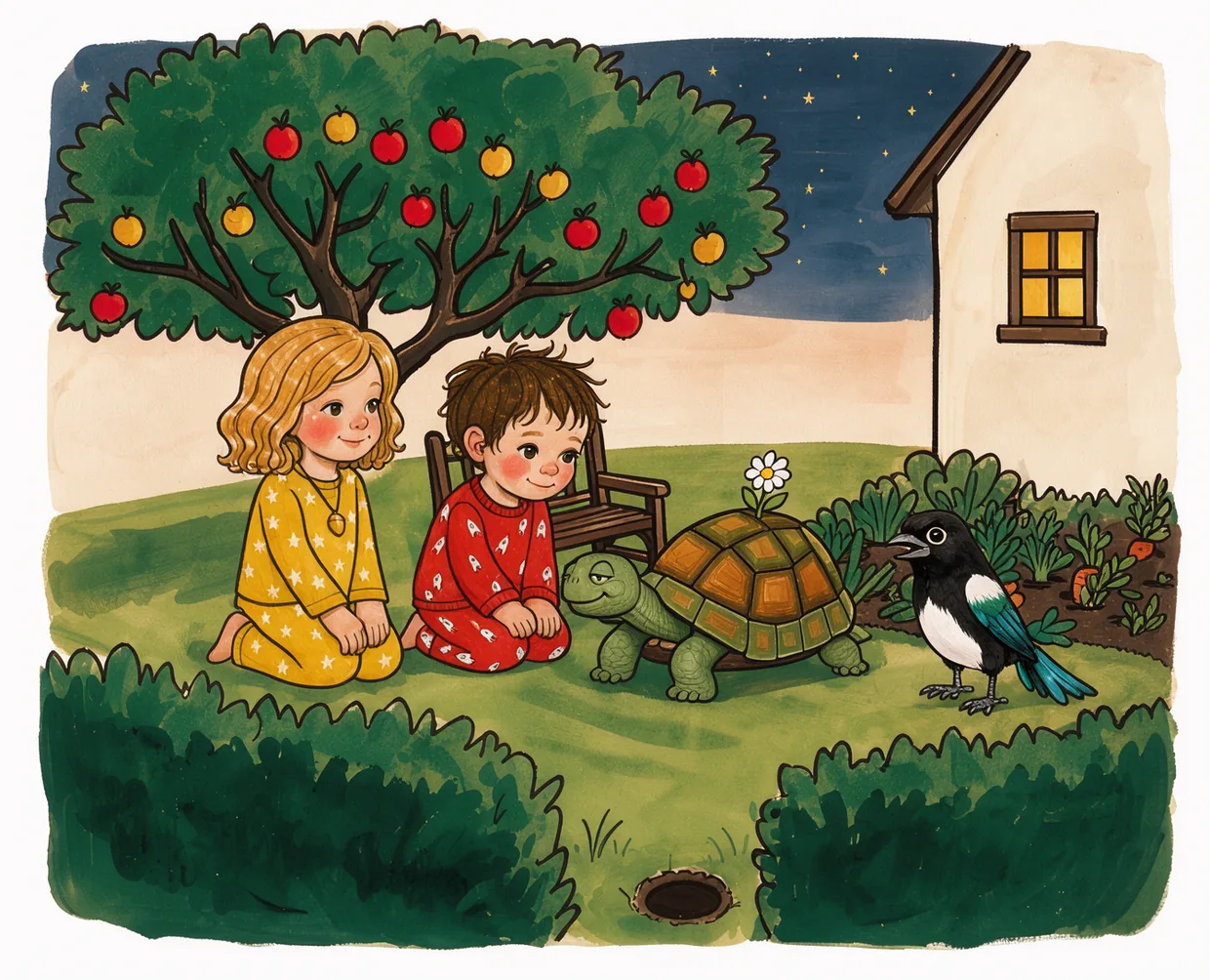
Pause and wonder
“Ponder,” said Lara, “Pip broke his promise. Was that wrong?”
“But he helped a baby bird!” said Zac. “But he PROMISED,” said Lara. Pip looked at his feet. Ponder blinked, very slowly. “Hmm,” she said. “I wonder. What do you think?”
9
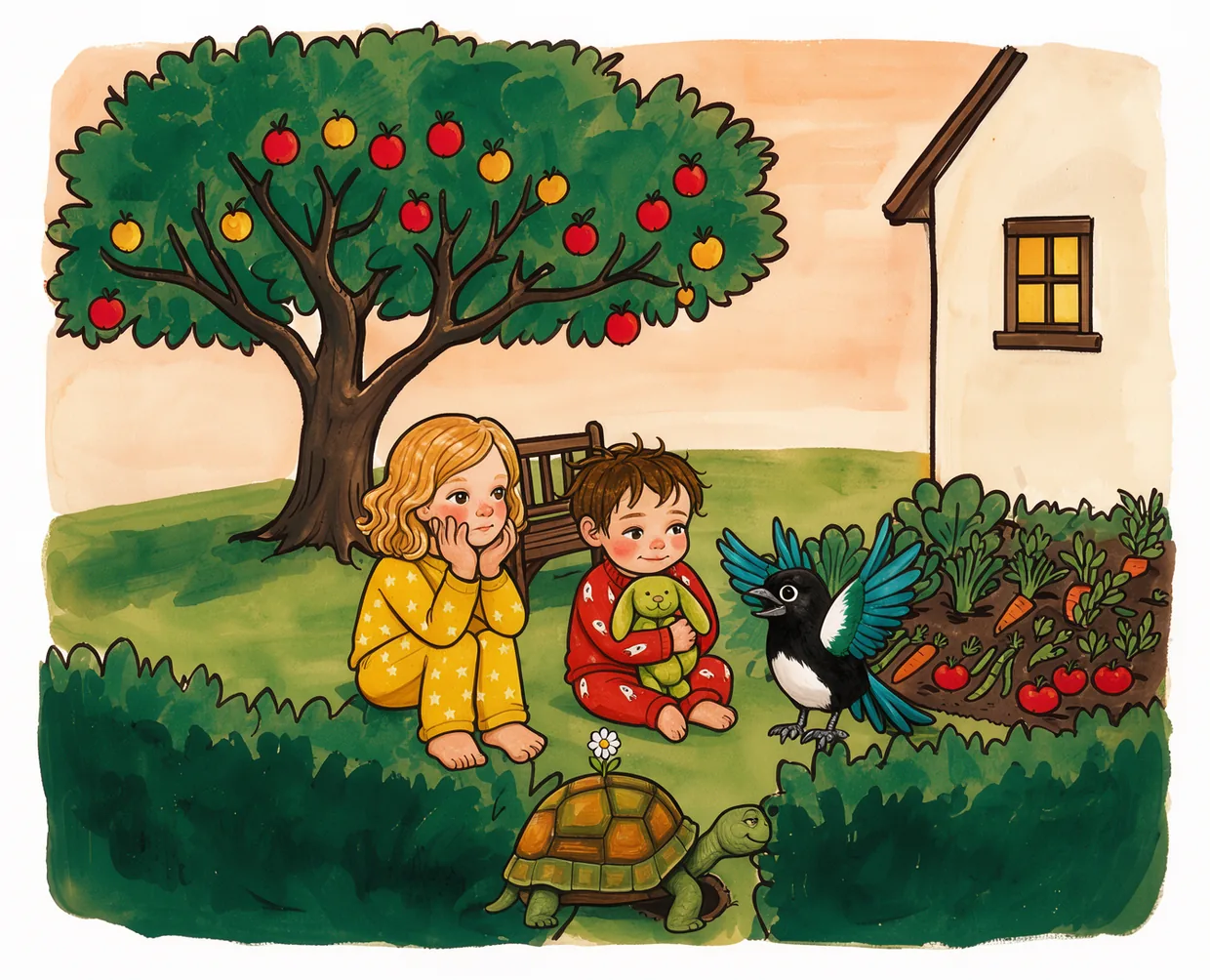
“What if,” said Ponder slowly, “Pip had flown straight past the baby bird to keep his promise?”
Lara thought about the little bird, all alone on the path. Zac hugged Bunny tight. “Promises are just words anyway,” said Pip, a bit too quickly. “No they’re NOT,” said Zac. “A promise is a promise!”
10
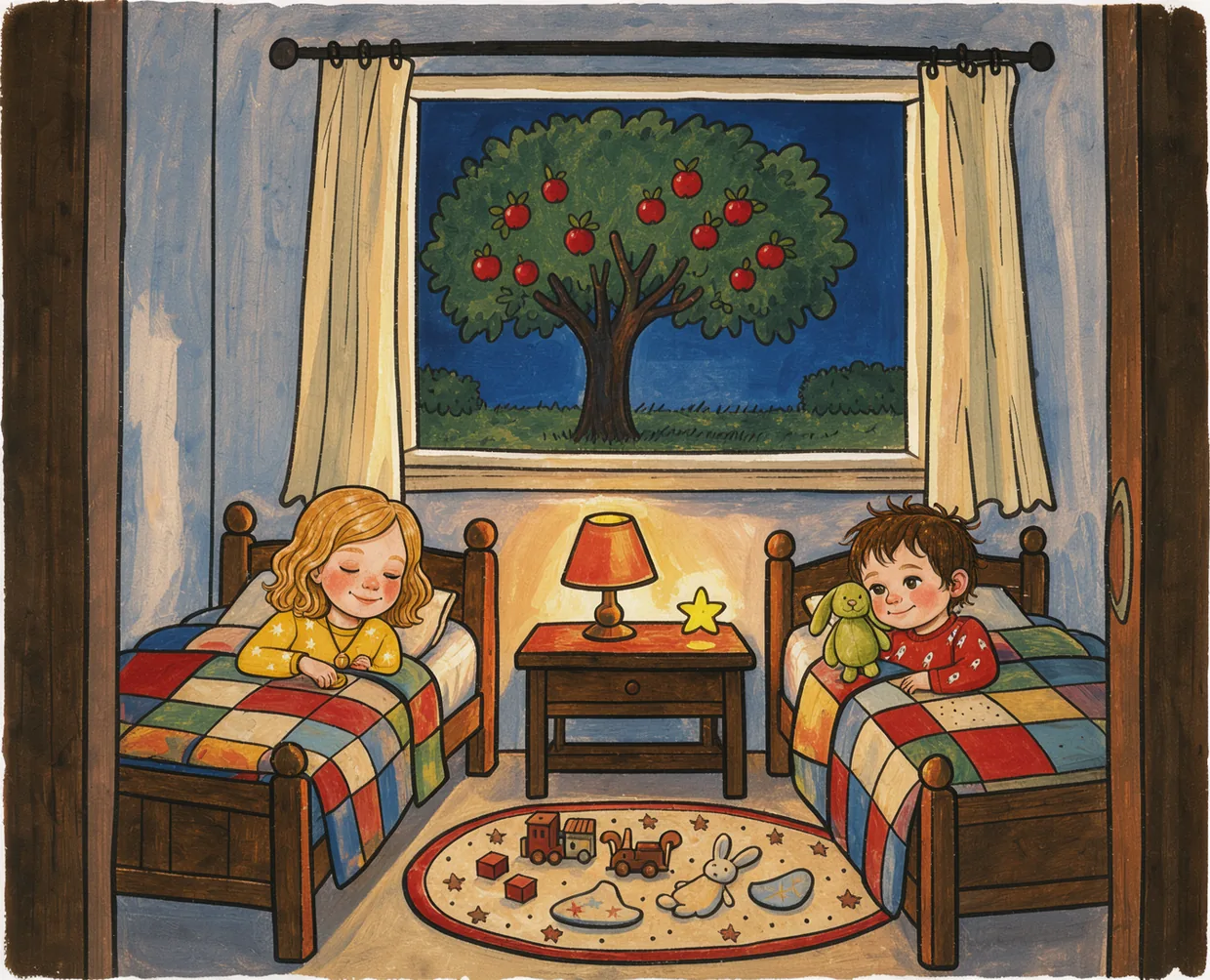
In bed, Lara held her gold button tight. “I’m glad about the baby bird. But I wish he’d kept his promise.”
“Can you be glad and cross at the same time?” asked Zac. Lara thought about it. Then she made a promise of her own. “I promise to go to sleep,” she said. “Maybe,” said Zac.
11
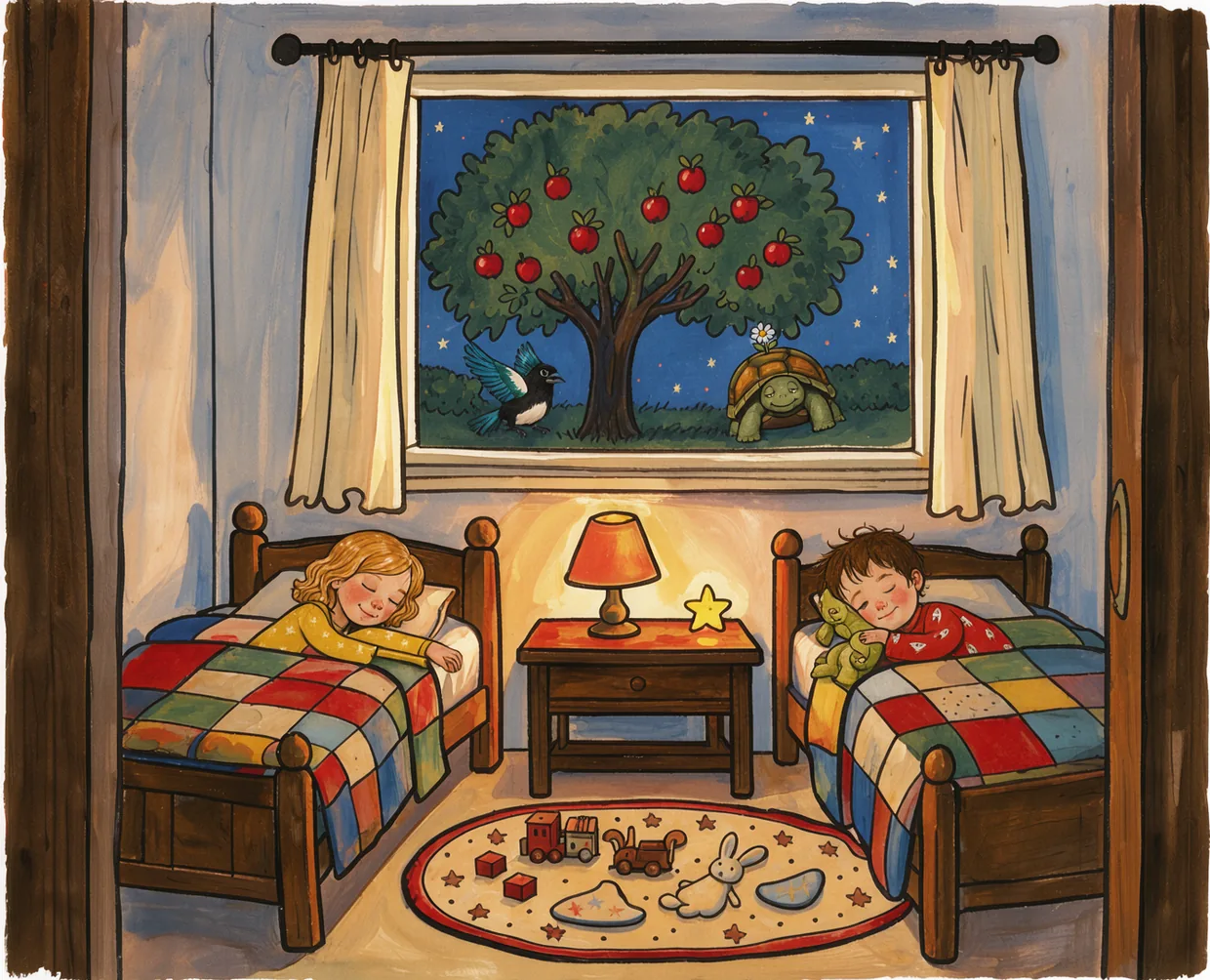
“Some questions are for sleeping on,” said Ponder. “Night night, Ponder.” “Hmm. Night night. I wonder…”
Over the garden wall, in the hedge, a baby blackbird was fast asleep, tucked under its mother’s wing.
12
Ponder’s question
Did Pip do the right thing?
Should Pip help the baby bird, or bring the button? Point to the one you’d choose.
Is a promise ever less important than something else? What makes a promise matter?
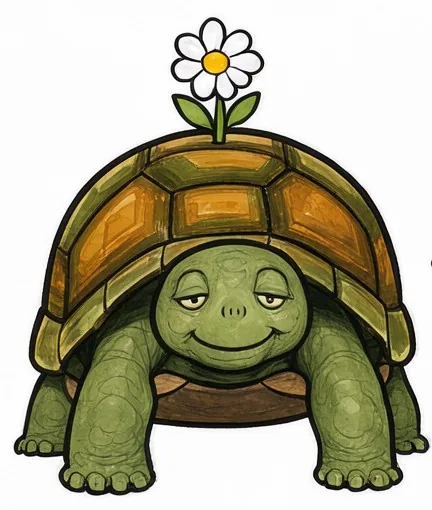
Some people think…
Pip did the right thing. Helping a baby bird is more important than a button.
Pip should have kept his promise. A promise is a promise, and Lara was waiting.
Pip could have done both, if he’d been quicker. Or told someone he’d be late.
Or something else?
You’re allowed to agree. You’re allowed to disagree.
For grown-ups
The question: A promise binds you to make something happen. Can another good reason ever outweigh it?
Its name: Promising and conflicting duties. W. D. Ross’s “prima facie duties” (keeping promises versus helping others); the old puzzle of returning a borrowed sword.
Where it comes from: Plato, Republic Book I (Jowett’s translation is public domain), where Socrates asks whether you should return a borrowed weapon to a friend who has gone mad. Retold here as a button and a baby bird.
Questions, little to big
- Did Pip keep his promise? (Yes or no.)
- Why might it be OK, or not OK, that he was late?
- Have you ever promised something and then something else got in the way?
- What if the button had been for something really important, like Lara’s birthday?
What they might say
Zac (3): Little ones often focus on the outcome (“He brought it!”) or simply repeat the rule (“A promise is a promise!”). Both are real moral positions, so take them seriously.
Lara (6): Six-year-olds often say “He should have told her” or “He could have done both”, which is a lovely, practical move. Ask whether it would still matter if there had been no way to tell her.
Tomorrow
Make a tiny promise together (“I promise to put Bunny on the windowsill at lunch”) and see if you can keep it. How did it feel to keep it?
How to wonder together: ask, then wait. Say their words back to them. “Can you say more?” “Someone might say…” Don’t say “right” or give your answer; Ponder never does. Too big for tonight? “Let’s wonder about that at breakfast.” (Then do.)