Book 5
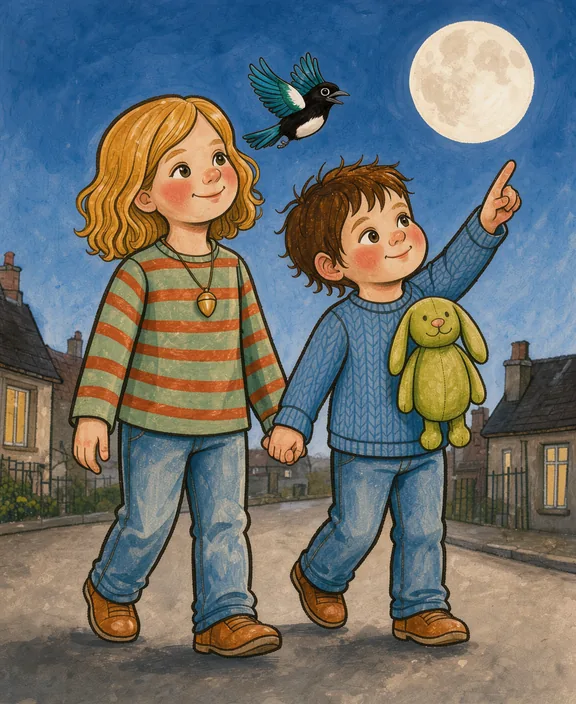
Who Does the Moon Follow?
For Lara and Zac
Use the arrows, swipe, or tap the edges of the page.
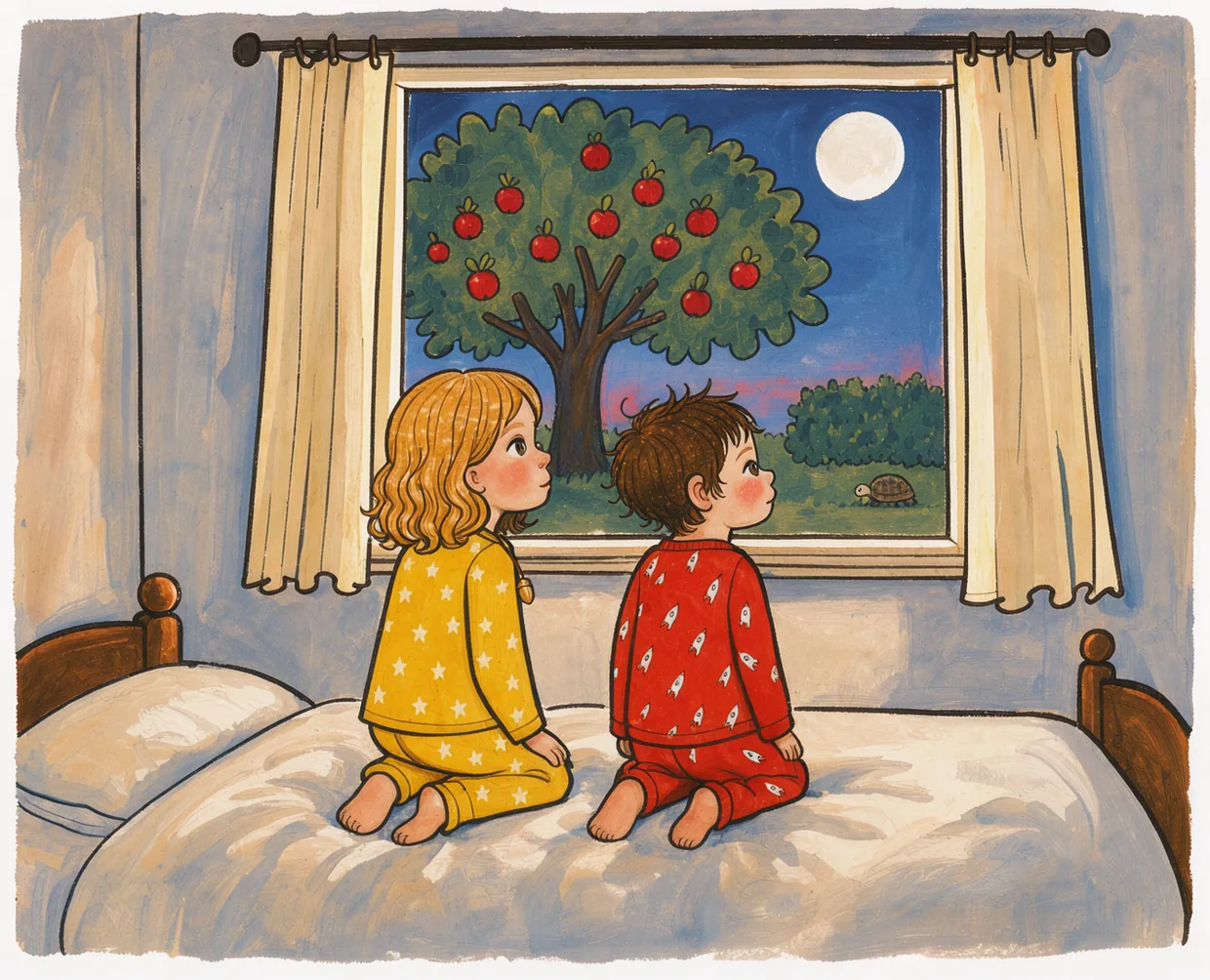
When the lamp goes warm and the garden goes quiet, Ponder comes out to wonder.
But tonight’s story began a little earlier, on the walk home from the park, just as the sky was turning blue and the first lights were coming on in the windows.
1
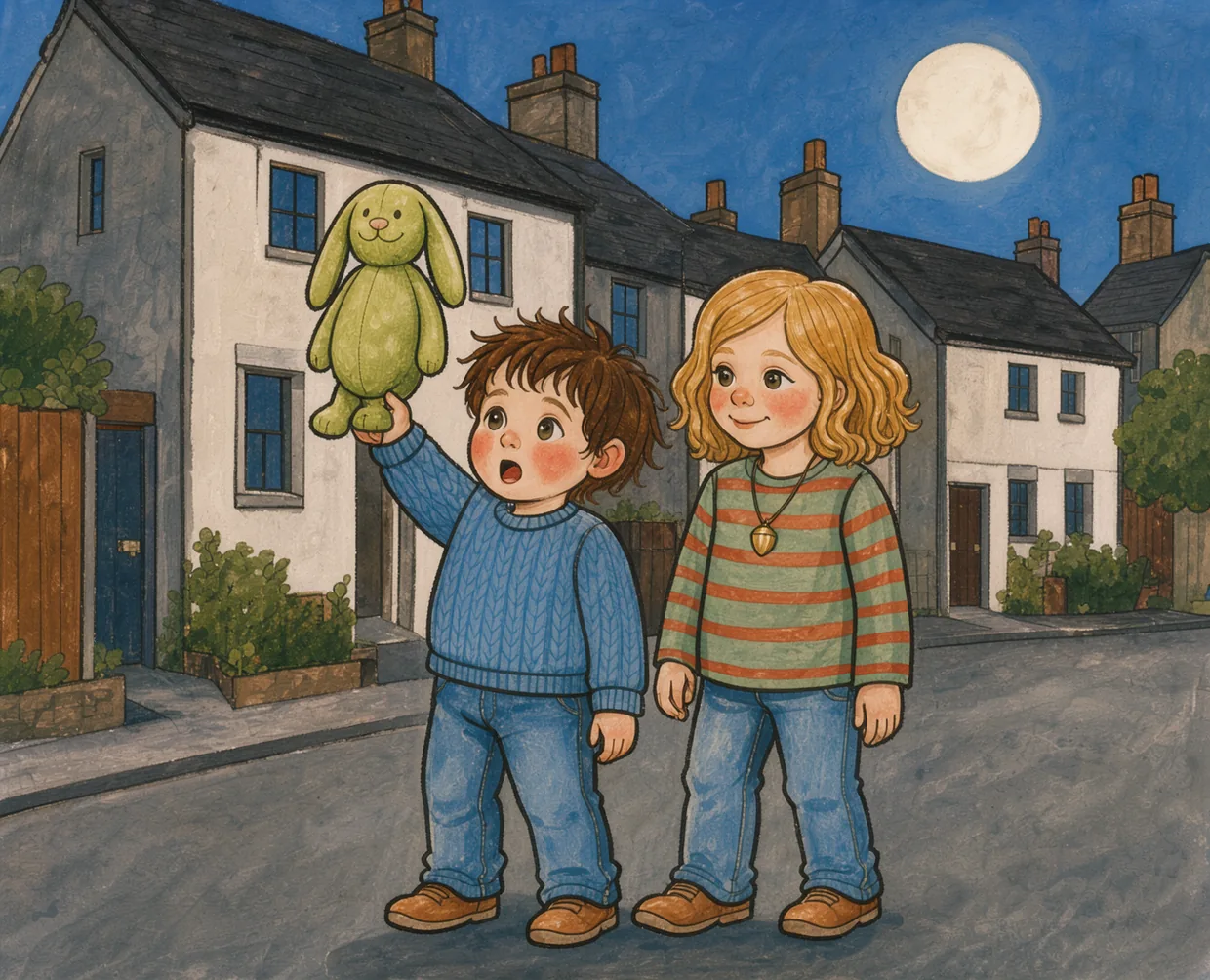
On the way home from the park, Zac stopped and pointed. “The moon is following ME!”
There it was, round and pale above the rooftops. Zac walked three steps, and the moon came too. Zac stopped, and the moon stopped. Zac held Bunny up so Bunny could see.
2
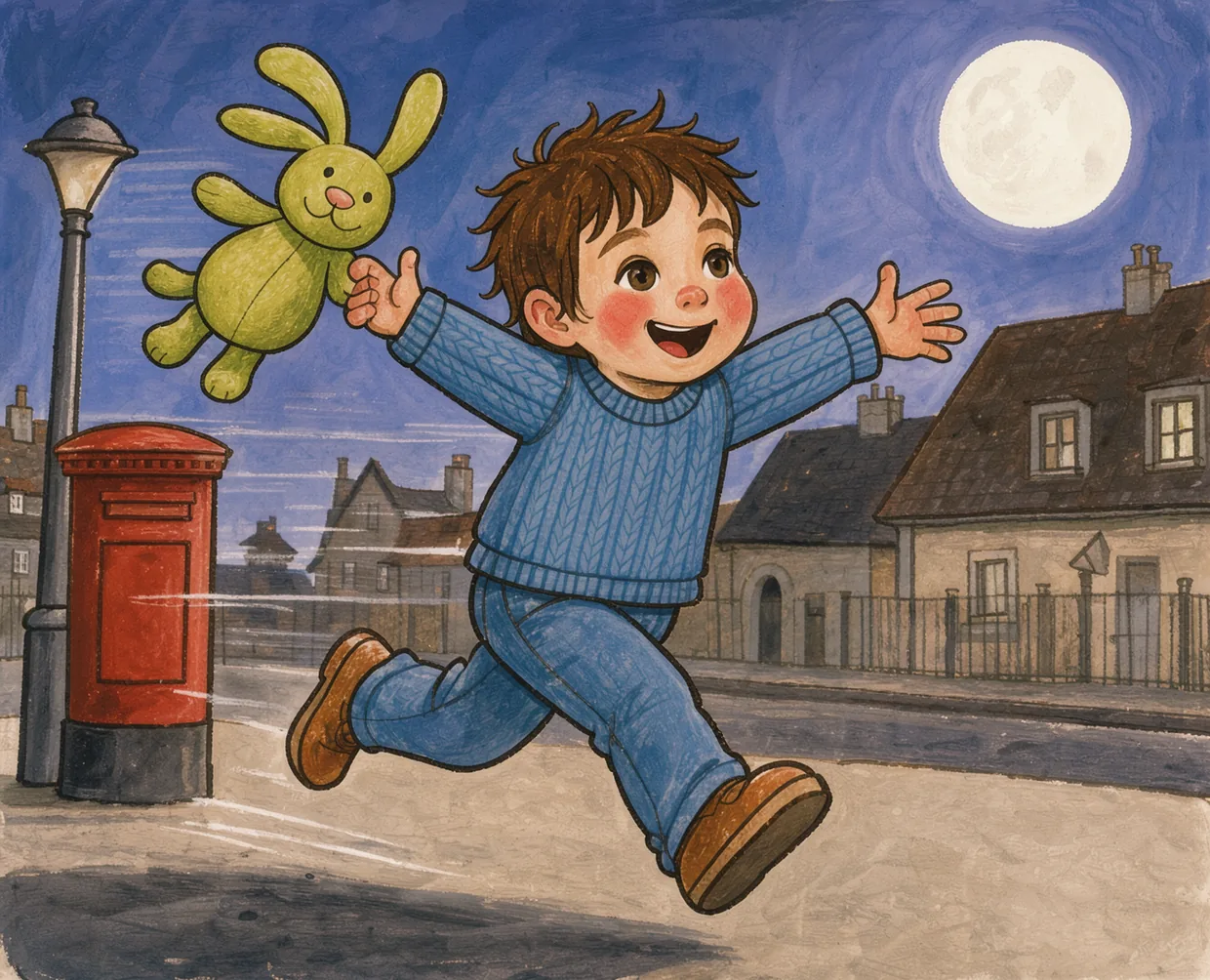
Zac ran as fast as he could. The moon ran too. “The moon is following ME!”
Past the postbox, past the lamppost, past the house with the yellow door. Every time Zac looked up, the moon was still there, right above him, like a balloon on a very long string.
3
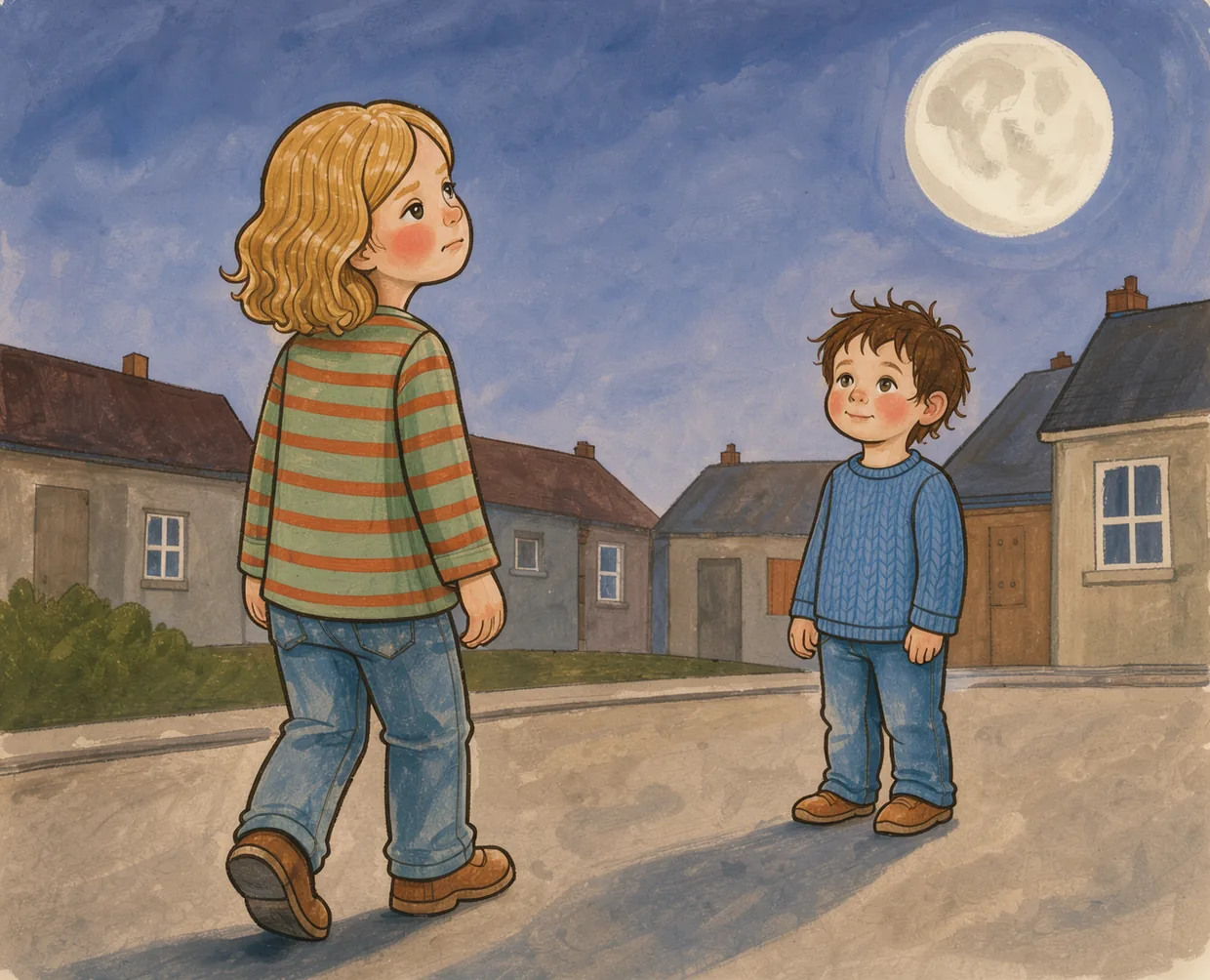
“It’s not following you,” said Lara. “It’s following ME. I’m the oldest.”
Lara walked backwards, very slowly, watching the moon. It stayed right above her too. Which was a bit odd, because Zac was now quite a long way ahead.
4
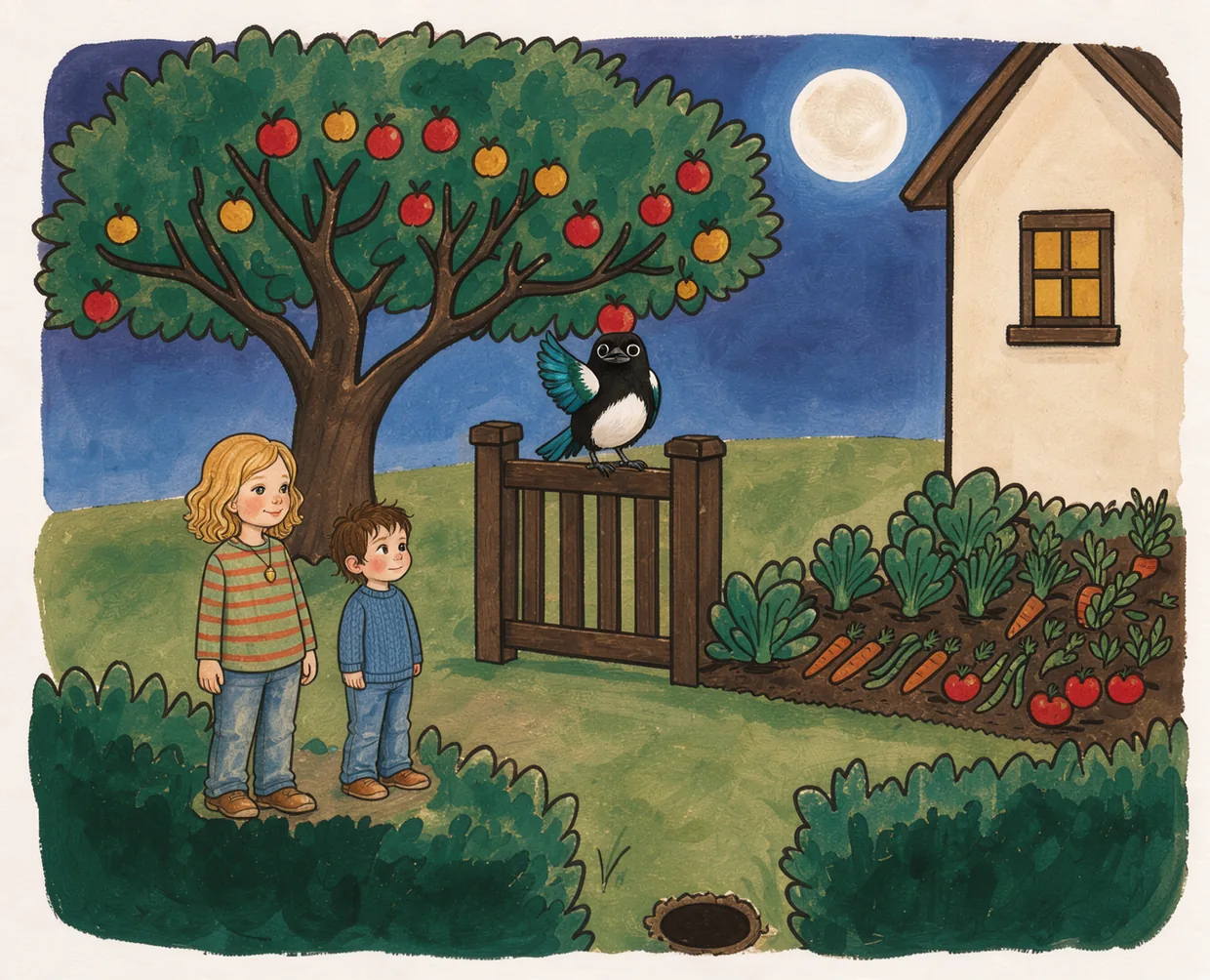
Pip was waiting on the garden gate. “Silly,” he said. “The moon follows shiny things. It’s following ME.”
Pip fluffed out his blue-green feathers. “The moon is the shiniest thing in the sky, and I am the shiniest thing in this garden. Shiny things stick together. Everybody knows that.”
5
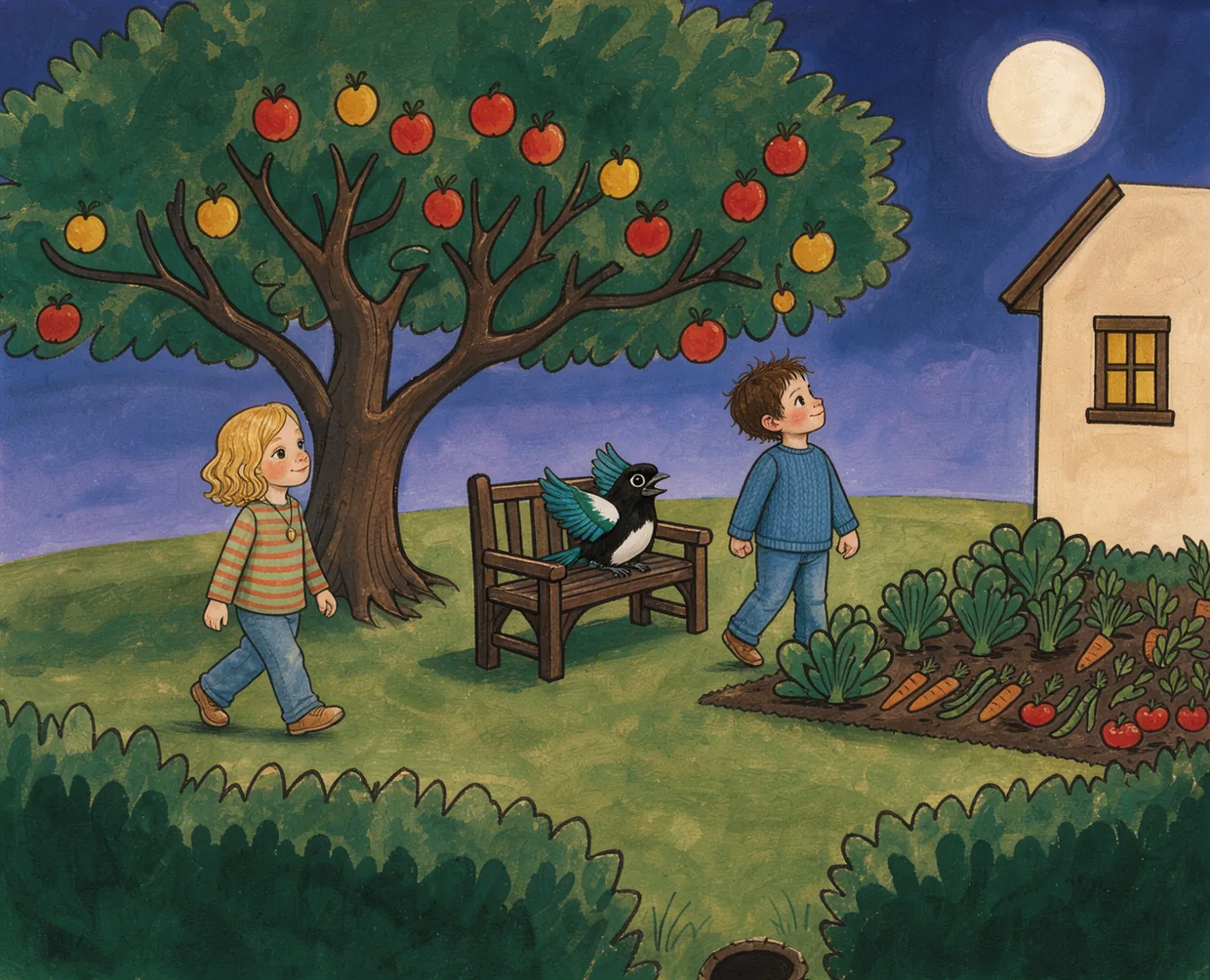
“Let’s test it,” said Lara. She walked one way round the apple tree. Zac walked the other way.
If the moon was following Lara, it would go with Lara. If it was following Zac, it would go with Zac. It could not possibly go both ways at once. Could it?
6
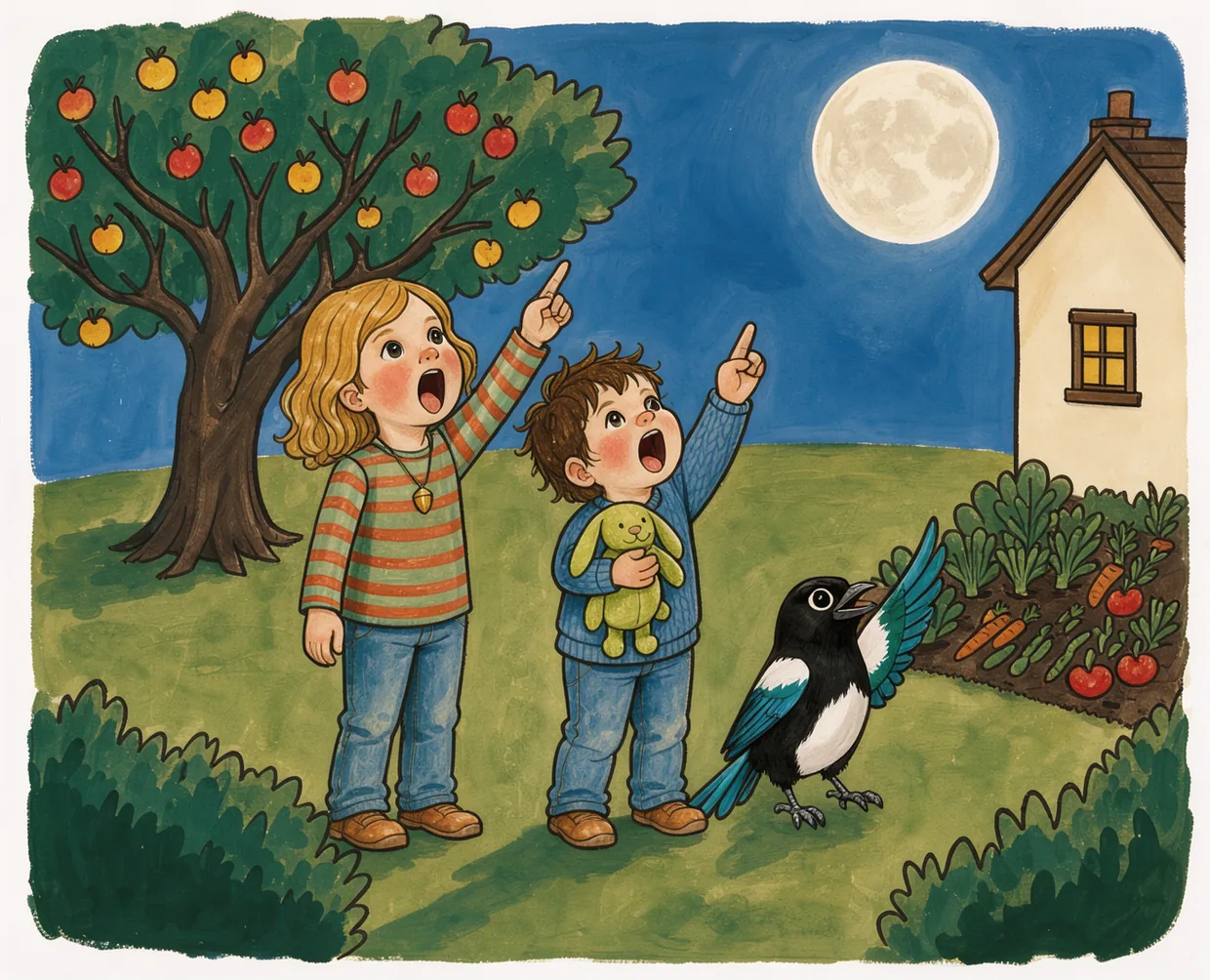
“It followed me!” said Lara. “It followed ME!” said Zac. “The moon is following ME!” said Pip.
They all looked up. The moon looked back down at all three of them, round and calm, as if it had nowhere else in the world to be.
7
Pause and wonder
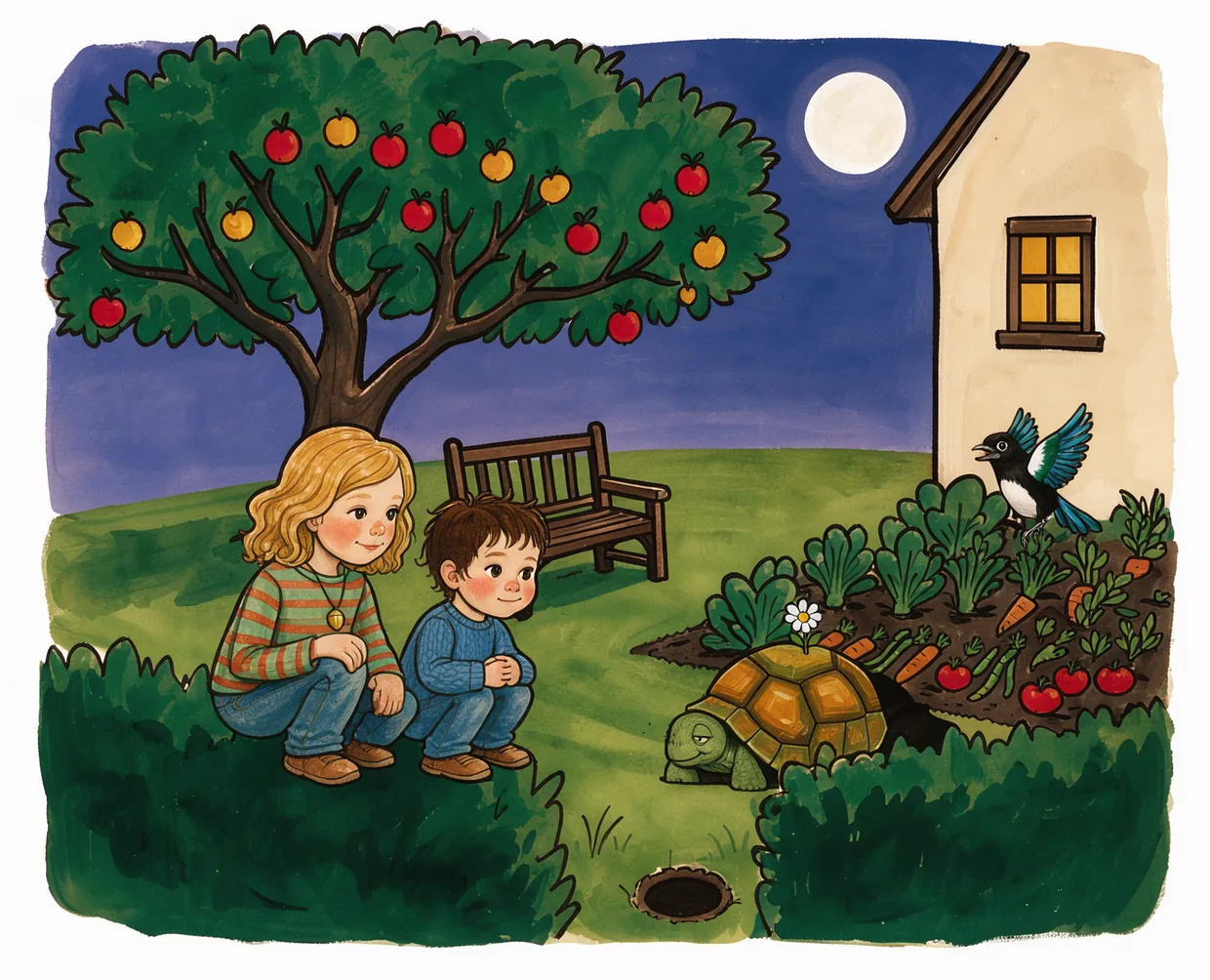
“Ponder,” said Lara, “is the moon REALLY following us? How can it follow everybody at once?”
Ponder had been watching from the hedge. She lifted her head towards the sky, very, very slowly. “Hmm,” she said. “I wonder. What do you think?”
8
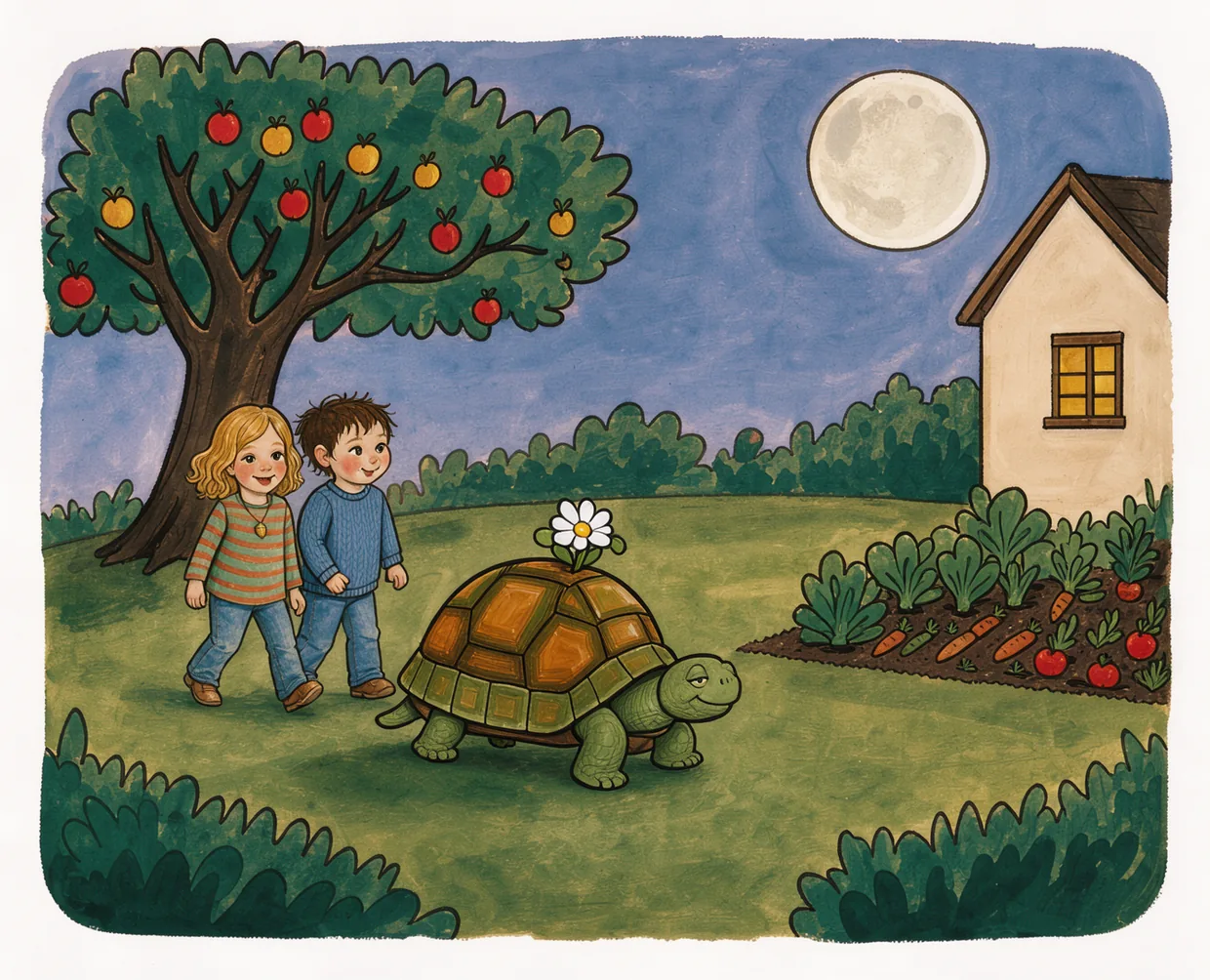
“When I go for a walk,” said Ponder, “the moon follows me too. And I am very, very slow.”
“A tortoise walking. A magpie flying. A girl walking backwards. A boy running with a rabbit. And the moon keeps up with every one of us.” She blinked. “That is either a very busy moon, or something else is going on.”
9
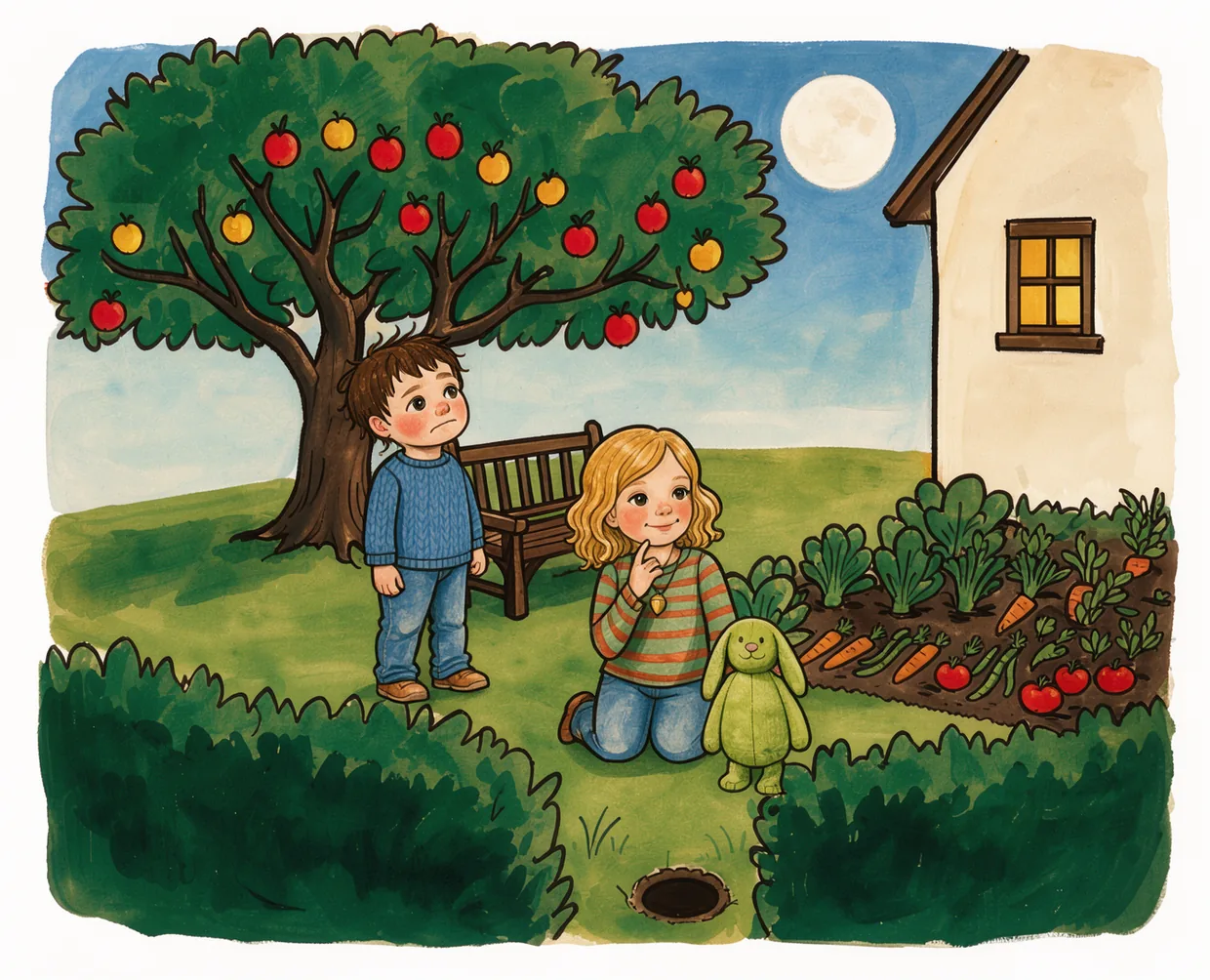
Zac looked at the moon. Then he looked at the apple tree. “The tree didn’t follow me,” he said.
It was true. When Zac walked, the apple tree slid past, and the hedge slid past more slowly. Only the moon, far, far away, stayed put. “Maybe,” said Lara slowly, “things that are really far away just look like they’re following.”
10
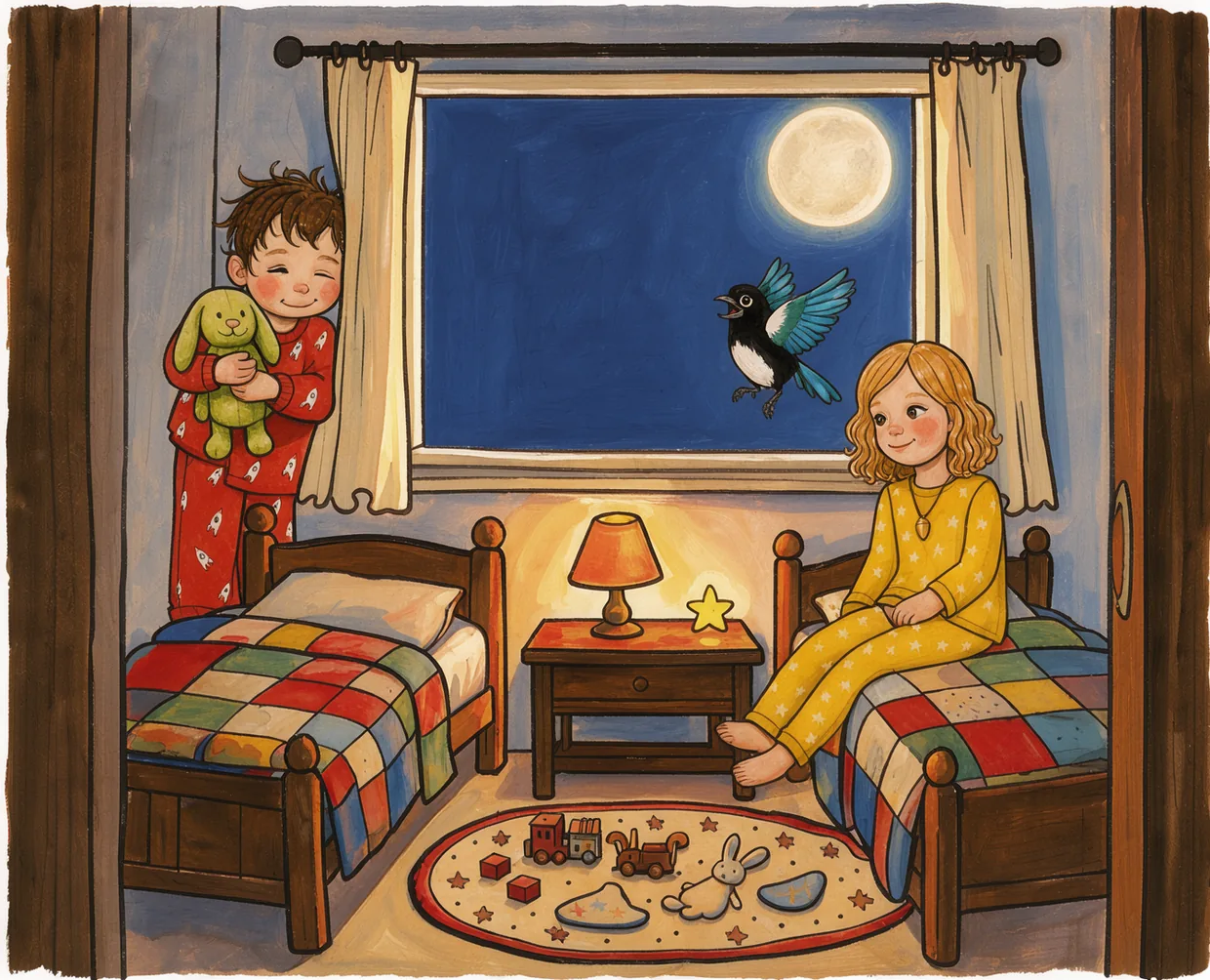
Back in bed, Zac peeped through the curtains. “The moon followed me home!” he whispered.
“Or we followed it,” said Lara. “Or,” said Pip, tapping on the window, “it just likes us.” Nobody could quite decide whether it really, really did.
11
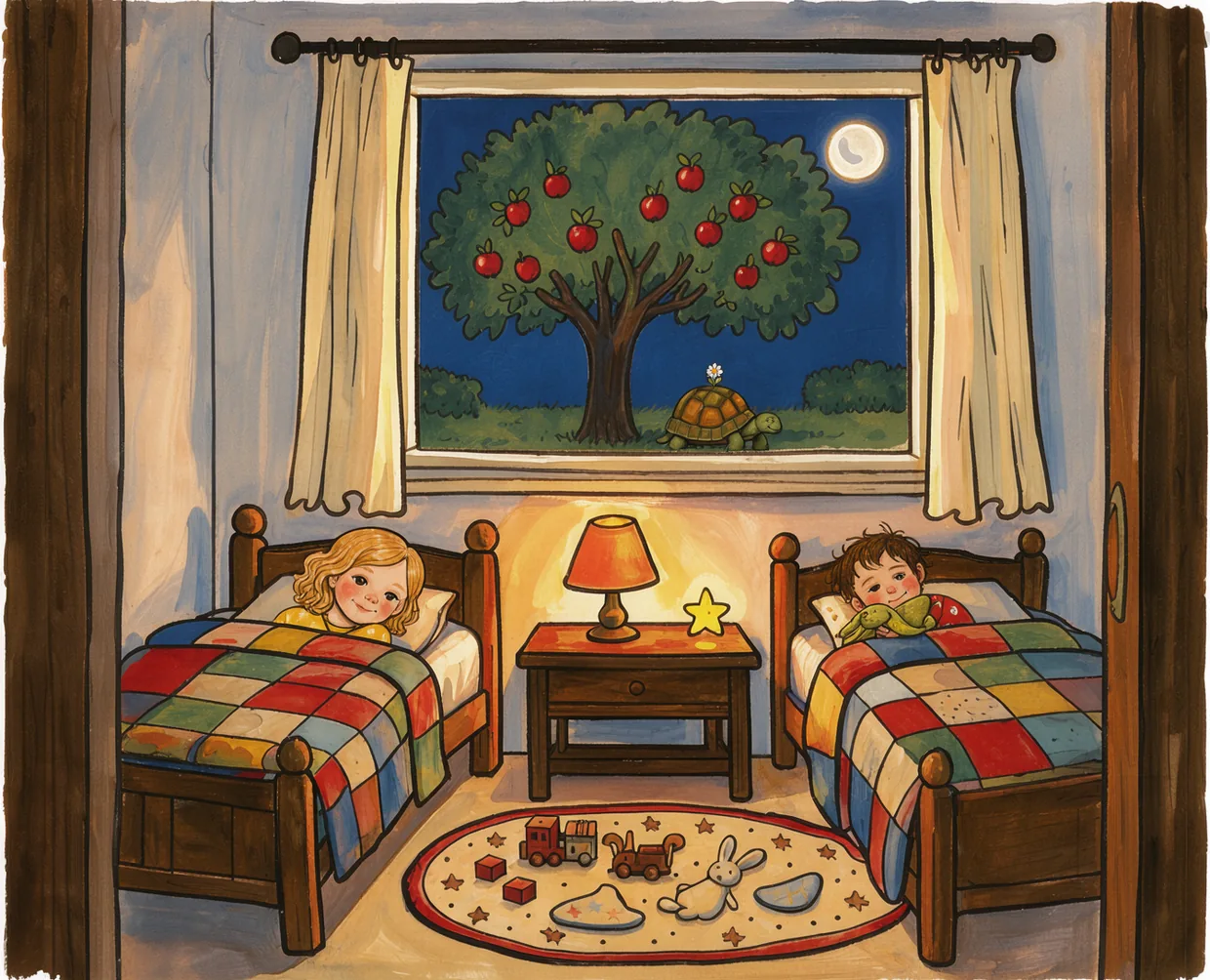
“Some questions are for sleeping on,” said Ponder. “Night night, Ponder.” “Hmm. Night night. I wonder…”
And the moon stayed exactly where it was, at the top of the window, keeping an eye on everybody at once, all night long.
12
Ponder’s question
Is the moon really following you?
Can you find the moon in every picture? Is it in the same place, or a different place?
How could we test whether the moon is following us? What would we see if it was?

Some people think…
The moon follows me, because every time I look up, it’s there.
It isn’t following anyone. It just looks like it, because it’s so far away.
It follows everybody, because it’s the moon and it can do that.
Or something else?
You’re allowed to agree. You’re allowed to disagree.
For grown-ups
The question: Things are not always as they seem. How do we tell the difference between how something looks and how it really is?
Its name: Appearance and reality; the problem of perception. Children’s “the moon follows me” belief was famously recorded by Jean Piaget.
Where it comes from: Original story. The question is as old as philosophy, from Plato’s worries about appearances (Republic, Book VII) to Descartes’ Meditations. Piaget describes children’s beliefs about the moon in The Child’s Conception of the World (1926).
Questions, little to big
- Does the moon move when you walk? (Thumbs up or down.)
- Why does the apple tree slide past, but not the moon?
- Have you ever seen something that looked one way but turned out to be another?
- What if you and a friend walked in opposite directions on a moonlit night? Where would the moon go?
What they might say
Zac (3): “It likes me!” Three-year-olds often give the moon feelings and wishes. That isn’t a mistake to fix; ask what the moon might want, then try the walking test together.
Lara (6): Six-year-olds may come up with the “far away” idea themselves, then wonder how far is far enough. Ask how she could check without anyone telling her the answer.
Tomorrow
On a walk, pick a lamppost close by and a tree far away. Walk ten steps. Which one seems to move more? Then try it again on a moonlit evening.
How to wonder together: ask, then wait. Say their words back to them. “Can you say more?” “Someone might say…” Don’t say “right” or give your answer; Ponder never does. Too big for tonight? “Let’s wonder about that at breakfast.” (Then do.)